Most homeowners believe that a security camera simply needs a clear line of sight to the front door. It’s actually a lot more complicated than just pointing your lens and hoping for the best. Smart home technology is only as good as its installation, and some common setup issues can create dead spots that render your hardware useless.
You’re wasting money by placing a high-definition camera outside a window or under a low-hanging eaves that catches too much glare. These devices are designed to work in specific environments, and ignoring environmental factors like lighting and obstacles means you’re just recording a blurry mess rather than real evidence.
It’s time to rethink DIY installation before a blind spot costs you more than a letter.
Read more: 5 Places You Should Never Place Amazon Echo
Location 1: Places where “privacy is expected”
You need a security camera to protect your home, but the last thing you want is for it to compromise the safety of others. Don’t risk breaking the law (and getting sued) by placing a camera where people have what the law calls a reasonable expectation of privacy.
As a rule of thumb, do not place a security camera in a bathroom, bedroom or similar area where there is a high expectation of privacy. If you need to place a camera in one of these locations (for example, to monitor your bedroom in a multiple rental), make sure the camera is visible and everyone in the house knows about it.
Outdoor cameras are allowed to film public areas, such as the sidewalk or street that runs past your home, since there is little expectation of privacy in these areas.
Remember that your camera helps provide a sense of security and serves as a tool to keep you and your home safe. Make sure your cameras are not placed in places that will make them ineffective or, worse, actually compromise someone’s safety.
The Arlo Essential Gen 2 Indoor Camera is a useful camera, but for best results, place it carefully.
Place 2. We look directly at the neighbor’s house.
In addition to protecting all private areas on your property, be careful when positioning security cameras so that part of their view is captured by a neighbor’s windows or backyard. From a legal standpoint, these are places where your neighbors also have a right to privacy, and lawsuits arise over much less.
That’s why you should try to avoid even having cameras pointed at your neighbor’s lawn or looking into their windows. Many modern security cameras have the ability to create “privacy zones” that block off certain areas in real time or camera recording. If a neighbor complains, you can show him your privacy zones to prove that no part of his home is being recorded.
Spot 3: Hard to reach areas.
You may be tempted to point cameras at hard-to-reach areas around your home. There is an intuitive reason for this: if you cannot see a place from windows or doors, it is quite possible that someone is hiding there. You might think that these hidden places are a favorite place for burglars to break into.
Typically, burglars enter a home through the most obvious routes. According to security company ADT, 34% of burglars enter through the front door and 22% through a first-floor window. The cleanest access points are the most common routes for hacking. Pointing a camera at these areas can prevent break-ins and help identify anyone trying to get inside.
Placing a security camera in an alley or in the back of a house may seem like it will catch someone sneaking around, but it is more likely to miss the action. If you really need to monitor hidden places, look for a kit that includes multiple cameras to install in multiple locations, e.g. This Arlo 6th Generation Wireless Camera Kit for $200which is equipped with built-in motion sensors that serve as an additional deterrent for intruders.
Lorex offers free object detection with its cameras, so make sure they have a good view.
Spot 4: Behind obstacles.
This may seem obvious, but camera obstacles aren’t always so obvious; outdoors, this may mean leaving room for tree branches to sway in the wind. Be careful with fast growing plants that will require you to move the camera every year or two, or tree branches that become much heavier when loaded with spring leaves/flowers and block your view. A quick trim can help with installation.
Also consider the viewing angle of your camera inside. Will your camera see everything you want when interior doors open and close? You should also avoid placing the camera in areas where a pet could interact with it. If you put it on a shelf, will the cat knock it off? Could an energetic dog running through the house cause it to tip over or change its angle? The same applies to racing babies.
Find a spot with a clear view of the area you want to observe, and where you, a guest, or your four-legged friend are unlikely to bump into it.
Location 5: Through the window
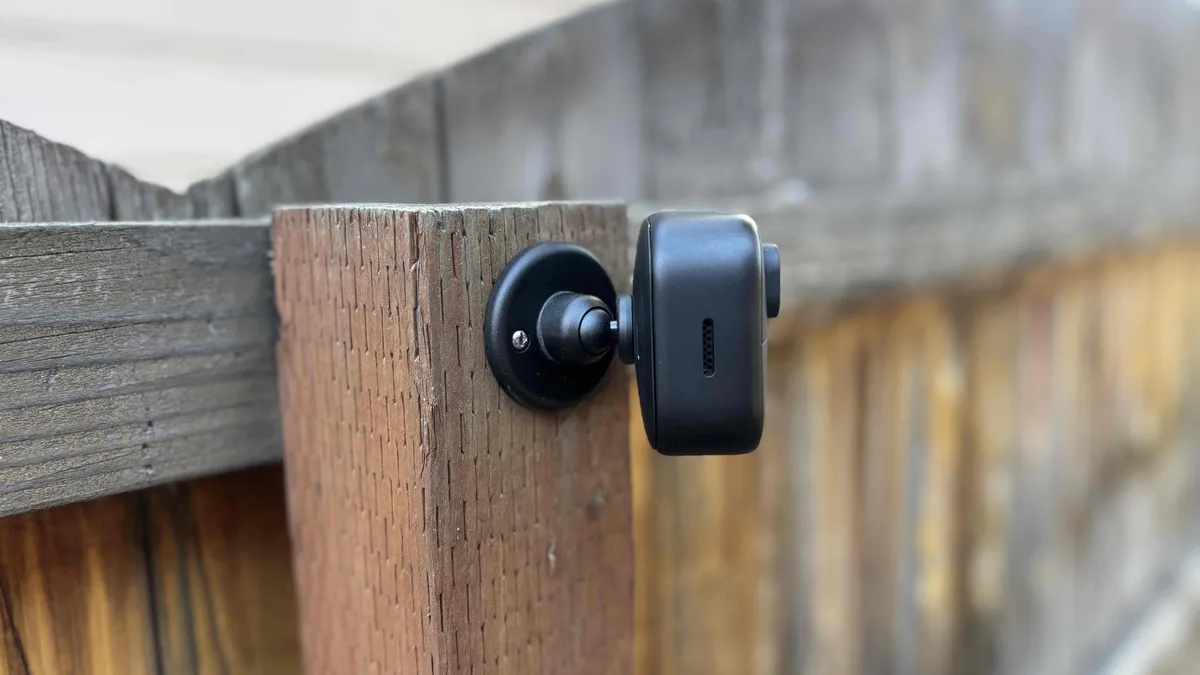
The Blink Outdoor 4 has an adjustable mount that’s strong enough to hold it at the right angle.
We know it’s tempting to pay less for an indoor-only camera and consider placing it near a window so she can see outside clearly. There are two big problems with this attempt.
First, windows have a glare problem. Even when the camera is pressed tightly against the glass, the view often doesn’t work when the sun is at a certain angle or when it’s dark outside. Over time, dust on the window causes similar problems.
Secondly, the corners and areas that you can see through the windows of the house are very limited. The cameras are unlikely to provide a good view of key access points or a wide view of the yard or driveway.
Location 6: Facing the Sky
We don’t mean deliberately positioning the camera so that it only captures the glorious blue beyond – we’re talking about cameras with a wide field of view that includes a significant portion of the sky. This can create problems when the sun passes overhead and blinds the camera with glare or blocks out details with brightness. Additionally, frequent direct sunlight increases the risk of UV damage and wear over time.
To prevent these problems, try to tilt your camera away from the sky and focus on views below the roof line/trees/hill. Also, try to place the cameras in an area where they are at least partially shaded.
Location 7: Near vents or heaters.
Installing the Arlo Pro Outdoors.
We encountered this issue during some of our tests and spot experiments and would like to warn you: do not install the camera near or above any exhaust vents or heat sources. This includes space heaters, fireplaces, fire pits, gas heating vents, and dryer vents.
Vents and exposed heat sources cause contamination of the camera and its lens, and higher temperatures are harmful to the battery of wireless models. The result is poor performance and a shorter lifespan of your camera. If you use adhesive joints for your camera, a nearby heat source may ruin the adhesive and cause your camera to fall and become damaged (another reason to avoid direct sunlight).
Point 8: On rough surfaces (when using glue)
If your wireless camera uses adhesive tapes, you will have to be very careful when placing them.
Adhesive tapes provide ultra-fast installation for lighter cameras, and the durable 3M tape is designed for outdoor use when used correctly. But it is not as reliable in weather conditions, especially if the seasons change between very hot and very cold days.
If you decide to use adhesive, it is important to avoid particularly rough surfaces where the decals may break. For example, I had poor results trying to glue them to fiber cement siding and didn’t bother trying them on a wood fence. Don’t try this with stucco.
Instead, use a flat, smooth exterior surface, such as metal or glass, that can be cleaned beforehand.
Bonus tip: What height should you place your camera at?
Most security cameras have no right or wrong height, although there are plenty of recommendations online and from the manufacturer. A higher vantage point will give a better view of a driveway or large yard, but we’ve found that a larger field of view (at least over 130 degrees) works just as well, if not better.
A rechargeable camera should generally be placed in an easily accessible location when the battery requires attention, although we also recommend using a solar-powered home security camera if possible. Video doorbells are typically installed approximately 4 feet from the bottom of the door frame. And wired cameras should always be installed either in a junction box or (if they have a plug) in an outdoor outlet.
Read more in others home security mistakes you may make. Find out how stop the porch pirates, reduce the risk of car break-in And what should you keep in a safe?.
Frequently Asked Questions
How to avoid legal problems when installing a CCTV camera?
When you install a security camera, you need to maintain an “expectation of privacy.” This means that you cannot film in places where people have a reasonable expectation that their activities will remain completely private.
In your property, this includes rooms such as the bathroom and bedroom, although you can still install a camera as long as you don’t hide it or make it obvious that security equipment is installed there. Outside the home, it would be best if you were careful when installing cameras that are pointed at strangers’ property, especially their backyards.
What are the biggest obstacles for a security camera?
If you want to ensure that your security camera can block your view, do not install it near tree branches. You should also avoid pointing the camera into the sun or through a window, as both of these places will cause a lot of glare and interfere with what you can see.
Why should I keep my camera away from vents or other heat sources?
A vent, heater, fireplace or other heat source can’t block your security camera’s field of view the same way a tree or window can, it will dirty your lens very quickly, meaning you’ll have to clean it very often to get a clear image. Additionally, heat sources can damage your camera’s battery, significantly shortening its expected lifespan.
Which states have two-party consent laws for audio recordings?
If your camera has the ability to record audio, be aware that some states require consent from two or all parties to record audio and use it for any legal reason. In other words, both parties to the conversation must indicate that they know it is being recorded. This includes California, Delaware, Florida, Illinois, Maryland, Massachusetts, Michigan, New Hampshire, Pennsylvania, Washington and, in certain circumstances, Oregon and Connecticut. If this concerns you, check your state’s laws.
#Worst #Blind #Spots #Security #Cameras #trending #[now:year]