

The Mac Pro has certainly had a turbulent history in recent years. All the way back to the “Trashcan” Mac Pro, and Phil Shiller’s “Can’t innovate, my ass” comment. Before the Trashcan’s introduction, Apple had let the previous generation of Mac Pro languish for several years. However, as we all know, the trashcan was a bit of a disaster for Apple, receiving only one lacklustre update in its lifetime. In 2017, Apple introduced the iMac Pro, and many thought then that this spelled the end of the Mac Pro. However, the new cheese grater was just around the corner (well, two years away) and the iMac Pro was really thought of as an interim solution for those who needed more power than the trashcan could provide. While this was a solution for many pros, (and even the regular iMac improved significantly during this time), there were still a considerable number of high-end users who required more than the iMac offered.
During this time, Apple famously offered a mea-culpa to its professional customers, and apologised for the Trashcan’s lack of updates. This was something that Apple almost never does. They promised they understood the needs of the Pro market, and said that a new “Modular” Mac Pro was on the horizon.
Enter the “new” cheese grater Mac Pro in 2019, made famous for its ridiculously expensive wheels add-on. This also saw the arrival of the Pro Display XDR. The 2019 Mac Pro was indeed innovative, and its MPX slots were unique, as were some of the processing boards they offered. However, all of this was short-lived, and much of it was made redundant by the move to Apple Silicon. The ProRes board, that was an expensive add-on at the time, was essentially built in to the Apple Silicon chips. When the Mac Studio came out, the writing was pretty much on the wall for the Mac Pro.
However, Apple did do one last iteration of the tower Mac, bringing Apple Silicon to the Mac Pro. Many felt that this was just a stop-gap solution, though, as it was essentially the guts of a Mac Studio, but with PCI slots and a hefty price tag. Unless you absolutely needed to use expansion cards, this was terrible value. And once again, Apple let it languish, with the processor never moving beyond the M2 Ultra. There were repeated rumours that Apple was planning another re-do, with a version of the M-Series chips sitting above the “Ultra” but it never materialised. And the rest, as they say, is history.
With the Mac Studio being ever more powerful, and thunderbolt 5 bridging the gap to PCI cards, it’s understandable that Apple would discontinue the Pro. I still think it’s a shame, though. I recently wrote an article on here, about why I think Apple shouldn’t kill the Mac Pro, and one of the points that I made, was that it was about more than just PCI slots. The Mac Pro’s big advantage was always less about expandability, and more about its modularity. While this was less the case in recent years, it was always useful that you could replace components should they fail. Given how locked down the Mac Studio is, Apple will no longer have a Mac that you can do this with (unless they improve the accessibility of the Mac Studio) in the future.
I’ve also seen people commenting that the Mac Pro was “stuck” at M2 Ultra, as if this was some technical limitation, but this wasn’t the case. Apple decided not to update it, rather than something preventing them from updating it. They could have done whatever they wanted. In my afore mentioned article, I outlined lots of suggestions as to what Apple could have done with the Mac Pro, including an M.2 SSD drive array, Multiple Processors and so on. Of course, none of that will ever come to pass now, but I still think they could have made something incredible (and incredibly expensive.)
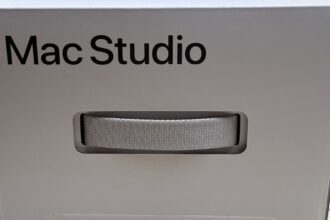
With the Mac Pro now officially retired, the high-end crown falls to the Mac Studio. To be fair, the Mac Studio is far more “Apple” than the Mac Pro ever was. Apple always wanted a smaller and a more minimalist computer, and in some ways, this fulfils the dream of the Trashcan Mac, or even the infamous Mac Cube. Apple always wanted this kind of form factor, but it was only with the move to Apple Silicon that they could finally pull it off. And to be fair, the Mac Studio is a fantastic computer.
A few years ago, I replaced my Ageing 2012 Mac Pro with a Mac Studio, and I haven’t looked back since. I do still have my Mac Pro running, though. I use it as a server, and it’s a testament to how well they were built. It kept on going through both the Trashcan era and the newer Cheese grater 2.0 era.
The big issue I have with the Mac Studio, and indeed many of Apple’s current generation of Macs, is that they feel disposable. If something goes wrong, you replace it with either a new one or Apple replaces it with a refurb (if still under warrantee). And while you can of course still repair these, it’s far from something the average computer user can and will ever attempt. Over the years, on my Mac Pro, I replaced the graphic card, the RAM, and even the hard drives with an SSD. All without having to take anything apart, or even using a screwdriver. I wouldn’t even attempt to open up the Mac Studio.
However, all is not lost on this front. With the MacBook Neo, Apple has mad strides towards making it more repairable, so who knows. Maybe a future Mac Studio will have at least some user replaceable components, or at least they might make them easier to access.
But what about the high-end? Well, for now, the Mac Studio it is. Currently, the highest spec configuration is an M3 Ultra, or an M4 max, although I suspect that will change soon. We should see the M5 Max and hopefully M5 Ultra this year. But beyond that, there was an interesting rumour that Mark Gurman reported for Bloomberg. In response to the MacBook Neo, the rumour is that Apple is planning to expand both ends of the Mac market. In addition to the low-end, they are also planning new computers at the high-end, above what they currently offer. So, while the Mac Pro may now be dead, and Apple have made clear that they are not directly replacing it, perhaps there is something else in the offing. Maybe there is something entirely different coming at the high-end. That could be just another higher spec Mac Studio, or it could be something different altogether. Or it could, of course, be nothing.
Either way, it’s kind of a bittersweet day. It’s sad to see the Mac Pro go. It’s long been a faithful companion for many years, or even decades if you include its predecessor. But the future is still bright in its studio shaped form factor.
So farewell old friend. It’s a cliché, but it really is the end of an era.
#Apple #Finally #Kills #Mac #Pro #Farewell #friend #Future #Thomas #Fitzgerald #Photography #trending #[now:year]