
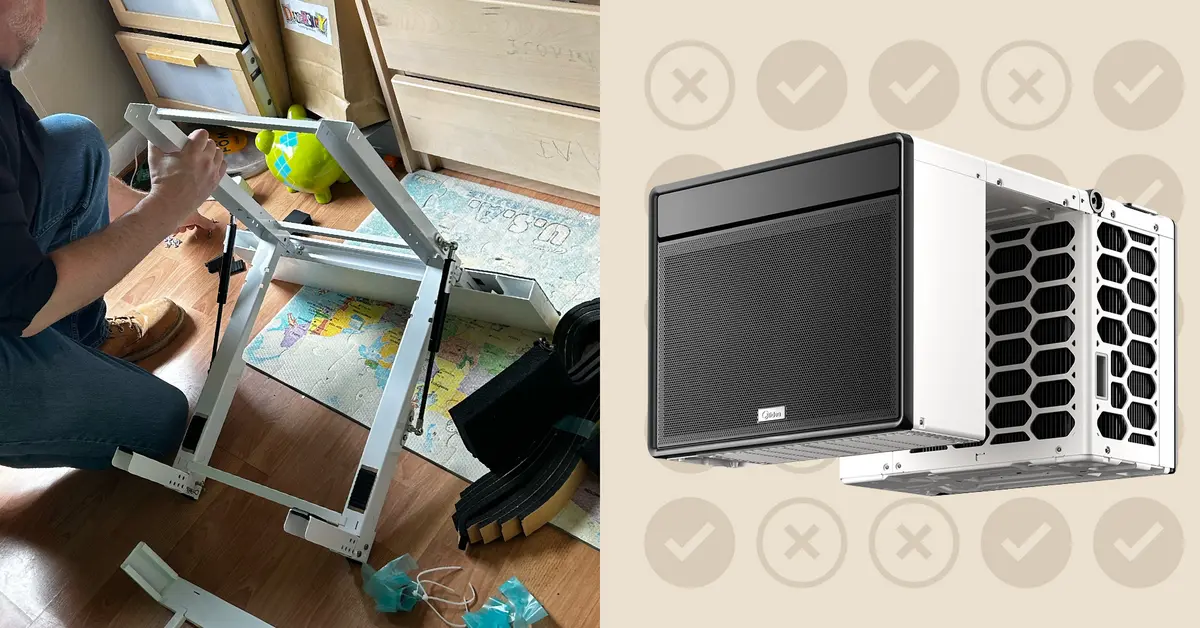
During the harshest weeks of January 2026, the Midea PWHP typically consumed 4 to 6 kWh per day, and energy consumption dropped significantly once the weather got a little warmer. Even on the coldest day of the year, when the outside temperature dropped to 5°F, the Midea PWHP still maintained 200% efficiency; in other words, every 1 watt of energy put into it still produced 2 equivalent units of thermal energy. And when the temperature rose to 40 degrees, the efficiency almost doubled, to 380%.
In contrast, the gas heater in my neighbor’s house is only 81% efficient. Even a traditional electric heating source such as a space heater will never be able to achieve more than 100% efficiency or a one-to-one ratio of energy input to heating output.
This is because all of these systems must create new heat – unlike a heat pump, which simply moves existing heat from one place to another. Of course, this process also becomes more difficult when there isn’t much heat around to move around.
By spring 2026, there had been no significant changes in my neighbor’s utility bills. The family still used a gas heater on the first floor, so the Midea PWHP was not the only source of heating in the winter.
But Midea PWHP has never added more than $20 to monthly energy costs, although that’s thanks in part to lower electricity rates for heat pumps in Massachusetts. The mini-split heat pump in my home used about four times as much energy over the same period (but it was also our main heating source).
Disadvantages, but not deal breakers
The user interface needs improvement. Midea PWHP has a ton of great programmable features, but the user interface is a nightmare. Every time I visited my neighbors, they raved about the quiet comfort of the Midea PWHP. And then they immediately started complaining about the management.
Setting the base temperature on the unit itself is quite easy. But if you want to do anything beyond that (like scheduling different conditions throughout the day), it can get unnecessarily complicated, whether you use the built-in controls, the included remote, the Midea SmartHome app, or even the user manual.
At one point I thought my phone had disconnected from the device, which may have affected my testing. After a tedious hour of trying to reconnect, I accidentally touched something that unlocked the exact data I was trying to find. The app is so counterintuitive that every time I open it, it still takes me a while to remember where to go.
It works in mysterious and even wasteful ways. You also need to get used to the comfortable two-way climate. Heat pumps generally work best when they maintain a constant temperature. So, if the unit is set to, say, 70°F, and the room gets warmer, the Midea PWHP can begin pumping heat out of the room to maintain the temperature at exactly 70°F.
This can be especially frustrating if you’re used to having separate heating and cooling systems, since each system only does one job and then stops. As my neighbor told me: “Sometimes you walk up to it and wonder why the cold air is blowing when it’s 15 degrees outside.”
This may seem a little wasteful, and technically it is. But the Midea PWHP is so efficient that it uses virtually no energy to do it. In fact, you can waste more energy by constantly turning it on and off to keep it from blowing cold air in the winter.
You can mitigate the problem somewhat by manually running the “cool” or “heat” mode instead of “auto”. But this also means you’ll have to actively switch to dry mode when you need it, and that can be annoying.
When it’s very cold outside, Midea PWHP is not as effective. It shouldn’t be so good in sub-zero conditions either. Technically speaking, this system is rated to operate in temperatures as low as -31°F (though luckily we never had to test this ourselves).
However, once it gets that cold, efficiency drops to around 120% and the unit loses about half its maximum heating output. Additionally, it may take a little longer for the room to warm up. If you live somewhere that experiences extremely cold temperatures frequently, you may want to consider combining the Midea PWHP with a more traditional combustion-based heating source. This is commonly known as a hybrid or dual heating system.

#Midea #window #unit #great #potential #tenants #interested #heat #pumps #trending #[now:year]