
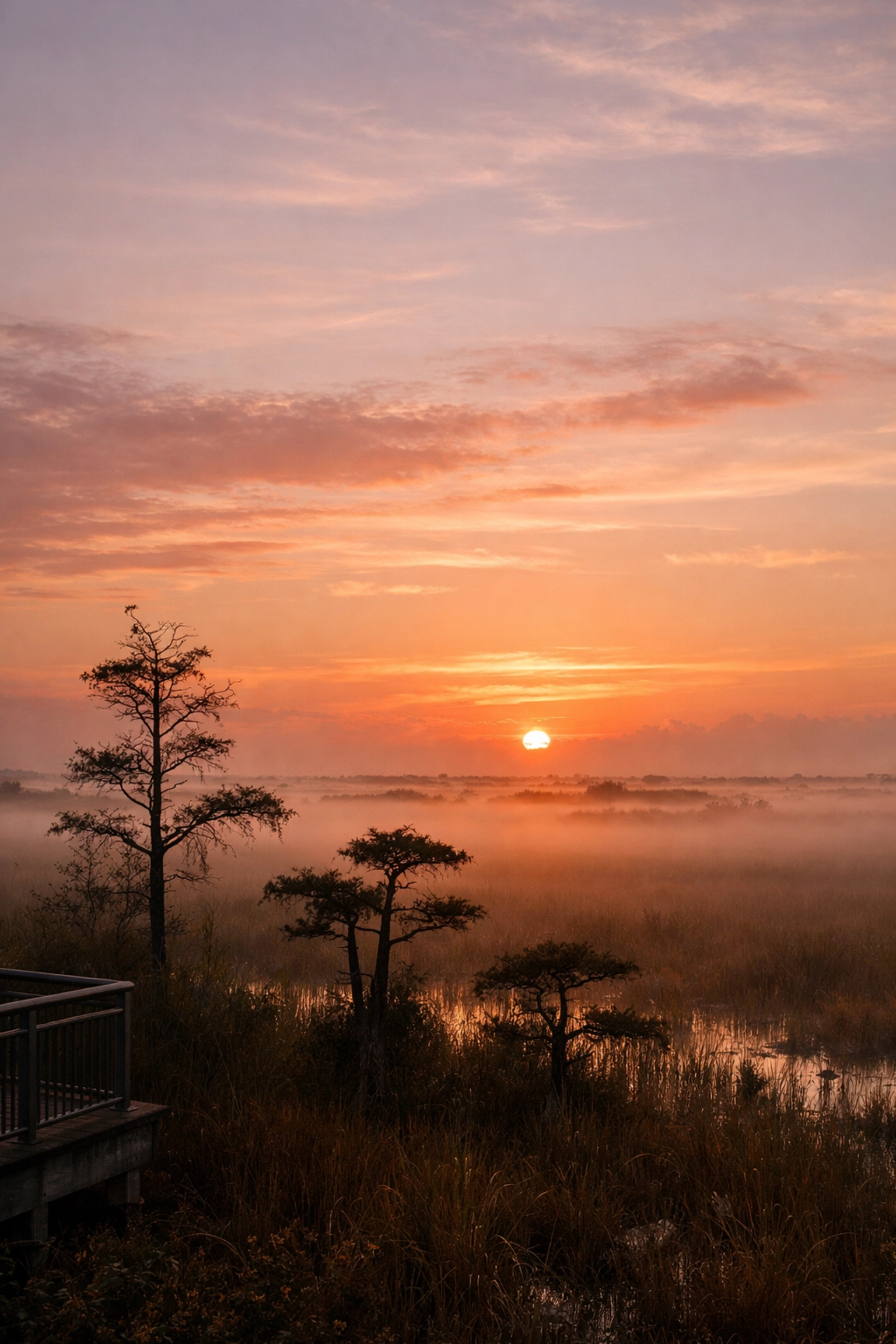
Just as the first light of dawn begins to pierce through the thick, humid air of Southern Florida, you realize you aren’t just standing in a swamp: you are standing in a prehistoric masterpiece. The Everglades, often called the “River of Grass,” is one of the most unique ecosystems on the planet, and for a photographer, it offers a visual playground that is as challenging as it is rewarding.
Whether you are looking to capture the iconic silhouettes of cypress trees or the quiet intensity of an alligator sliding through the sawgrass, mastering landscape photography in the Everglades requires more than just a good eye. It requires a strategy, the right gear, and an understanding of the rhythm of this wild land. If you’ve ever felt overwhelmed by the sheer vastness of the marsh, this guide is designed to empower you with the insider knowledge you need to walk away with gallery-quality images.
Understanding the Rhythm: When to Visit
Your success in the Everglades depends almost entirely on the timing of your visit. Unlike other national parks where seasons are defined by temperature, the Everglades is defined by water.
The dry season (November to April) is your golden window. As water levels drop, the wildlife becomes more concentrated in deeper pools, making wildlife photography in the Everglades significantly easier. More importantly for your landscape work, the weather is more predictable, the humidity is manageable, and the mosquitoes: nature’s original security system: are less aggressive.
If you are chasing that perfect sunset or sunrise, you need to be on-site when the light is at its softest. The low-angled sun during these hours enhances the textures of the sawgrass and creates long, dramatic shadows that give your flat landscapes a sense of three-dimensional depth.
Premier Everglades Photography Locations
To get the most out of your trip, you need to know exactly where to set up your tripod. While the park is massive, certain Everglades photography locations stand out for their consistent beauty and accessibility.
1. Pahayokee Road: The Sunrise King
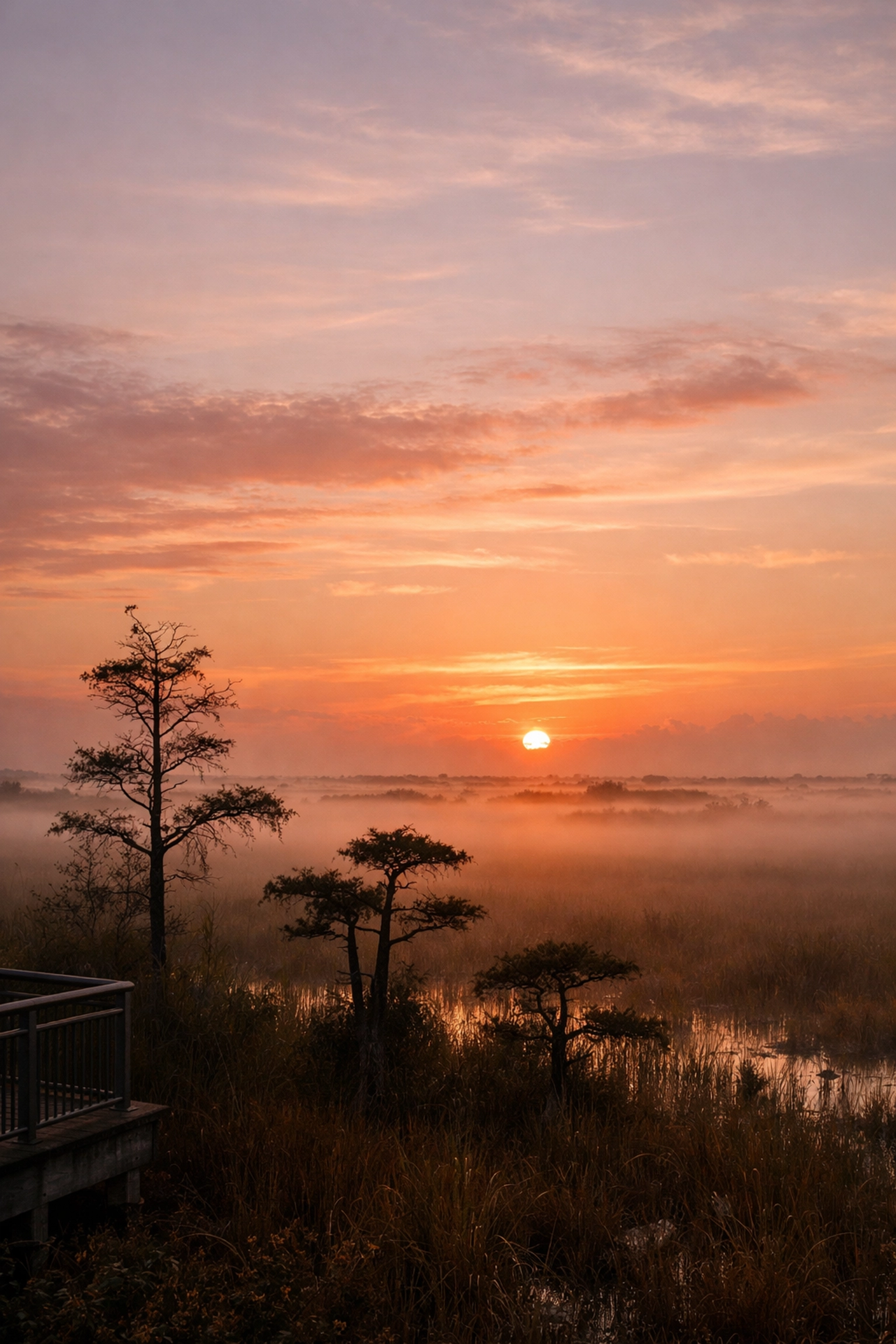
If you want to capture the quintessential Everglades sunrise, Pahayokee Road is your destination. Located about 10 miles into the park, the elevated boardwalk gives you a sweeping view of the “River of Grass.” When you shoot toward the east, the cypress trees create stunning silhouettes against the orange and pink sky. If the water levels are low, you can even venture carefully into the sawgrass for a more immersive perspective.
2. Anhinga Trail: Wildlife and Landscape Fusion
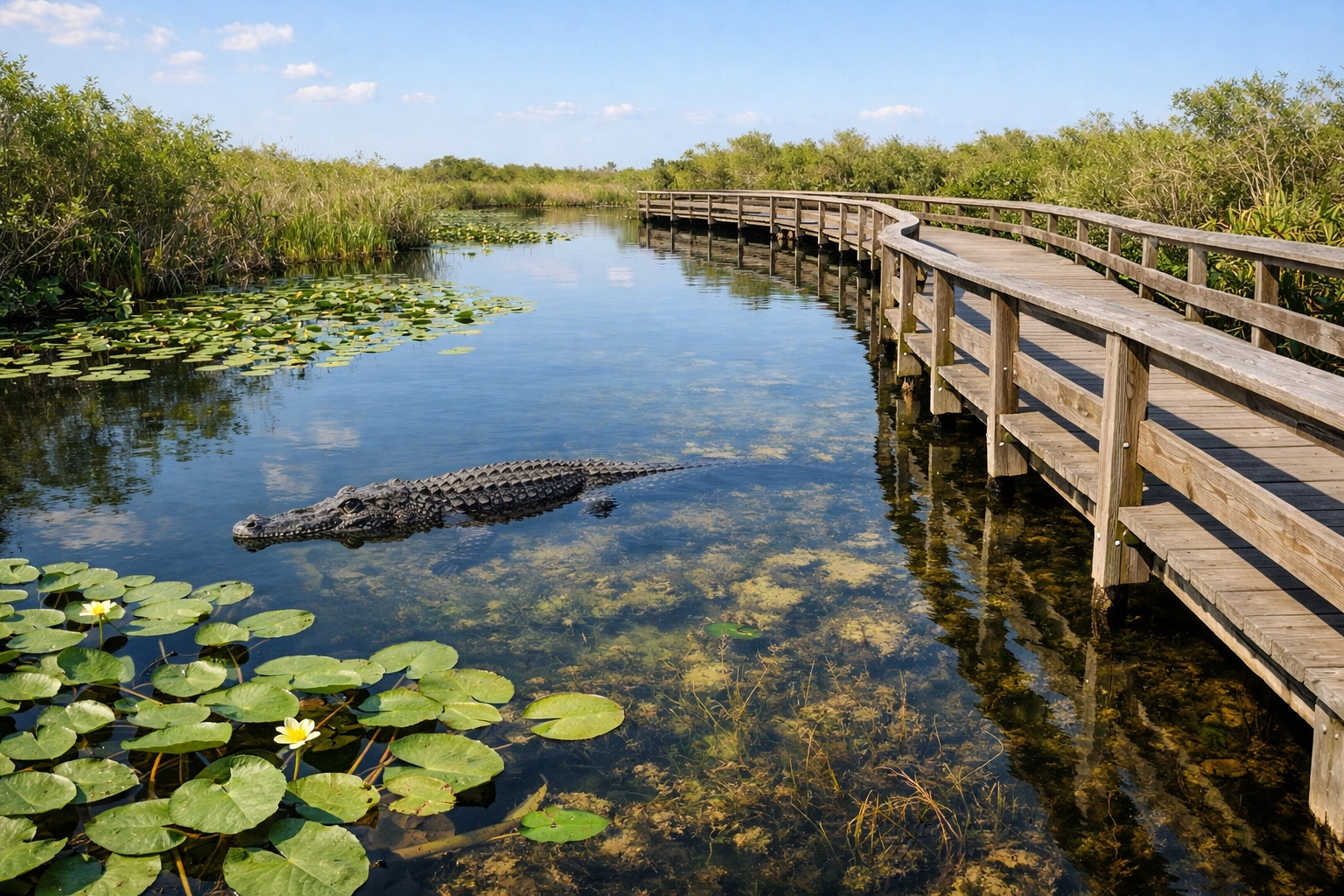
The Anhinga Trail is arguably the most famous spot in the park, and for good reason. It’s a masterclass in biodiversity. Here, you can practice both landscape photography in the Everglades and wildlife shots in the same hour. You will find wading birds, alligators, and turtles framed by lily pads and sawgrass. Because the wildlife is used to humans, you can get remarkably close, but always remember to maintain your professional distance.
3. Shark Valley: The Vast Vistas
Shark Valley offers a 15-mile loop that takes you deep into the heart of the marsh. The observation tower here provides a literal bird’s-eye view of the ecosystem. It’s an unmatched location for capturing the sheer scale of the landscape. Using a wide-angle lens here allows you to include the vast Florida sky, which is often filled with dramatic, towering cumulus clouds.
4. Flamingo: Where the Land Meets the Sea
At the southernmost tip of the park lies Flamingo. This is where the freshwater of the Everglades meets the saltwater of Florida Bay. It’s a fantastic spot for coastal landscapes and unique mangroves. The light here reflects off the ocean water in a way that feels almost ethereal during the blue hour.
For a complete breakdown of every hidden gem and secret GPS coordinate, make sure you pick up the Everglades Photography Guide. It’s the ultimate shortcut to getting the shots you’ve always dreamed of.
Essential Gear for the Marsh
The Everglades is a harsh environment. It’s wet, it’s humid, and it’s unpredictable. Your gear needs to be as robust as your ambition.
| Feature | Recommendation | Why You Need It |
|---|---|---|
| Camera Body | Mirrorless or DSLR | Ensures high resolution and weather sealing. |
| Wide-Angle Lens | 16-35mm f/2.8 | Essential for sweeping landscapes and big skies. |
| Telephoto Lens | 100-400mm | Necessary for wildlife photography in the Everglades. |
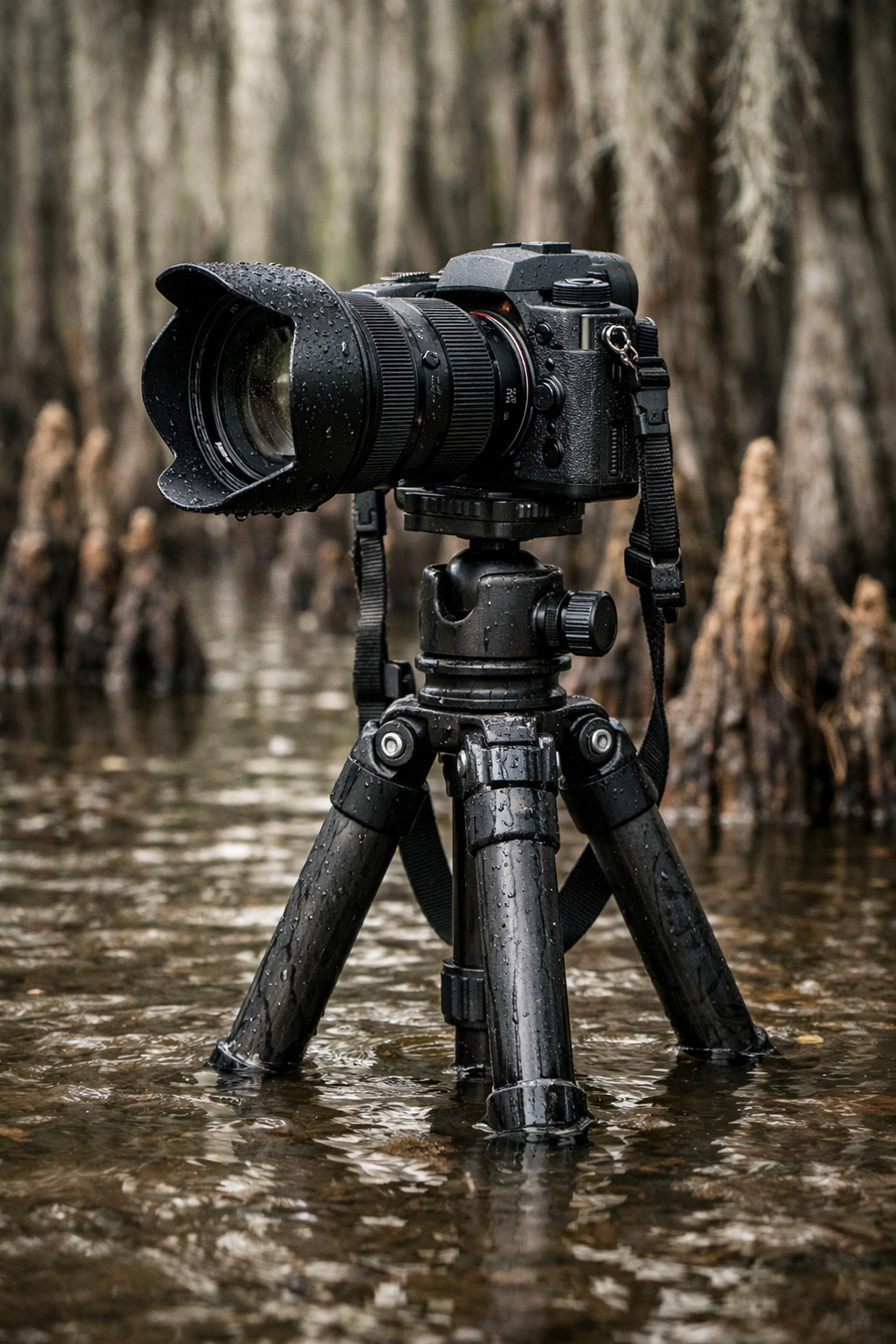
| Tripod | Carbon Fiber | Must be sturdy for long exposures and resistant to swamp water. |
| Filters | Circular Polarizer | Cuts through water reflections and pops the cloud contrast. |
A sturdy tripod is not an option; it is a requirement. If you are shooting during the low light of sunrise or sunset, you need stability to ensure your images are tack-sharp. Furthermore, a circular polarizer will be your best friend when trying to manage the glare on the water or the vibrant greens of the foliage.
Technical Mastery: Camera Settings
When you’re out in the field, you don’t want to be fumbling with your dials. You want your settings to be second nature so you can focus on the composition.
- ISO Control: Keep your ISO as low as possible (100–400) to minimize noise and maintain the cleanest image quality for fine art photography.
- Aperture Choice: For those vast landscapes, stick between f/8 and f/16. This ensures that everything from the blade of grass in your foreground to the distant horizon is in sharp focus.
- Shutter Speed: If you are capturing reflections in still water, a slower shutter speed (1/30s) can help smooth out any minor ripples, creating a mirror-like effect.
- Exposure Bracketing: The contrast between a bright Florida sky and the dark shadows of the mangroves can be extreme. Use exposure bracketing to capture a range of light, which you can later merge for a perfectly balanced high-dynamic-range image.
Composition: Seeing Beyond the Grass
The Everglades is a subtle landscape. It doesn’t have the mountain peaks of the Rockies or the red rocks of Sedona. To succeed here, you must look for patterns, textures, and leading lines.
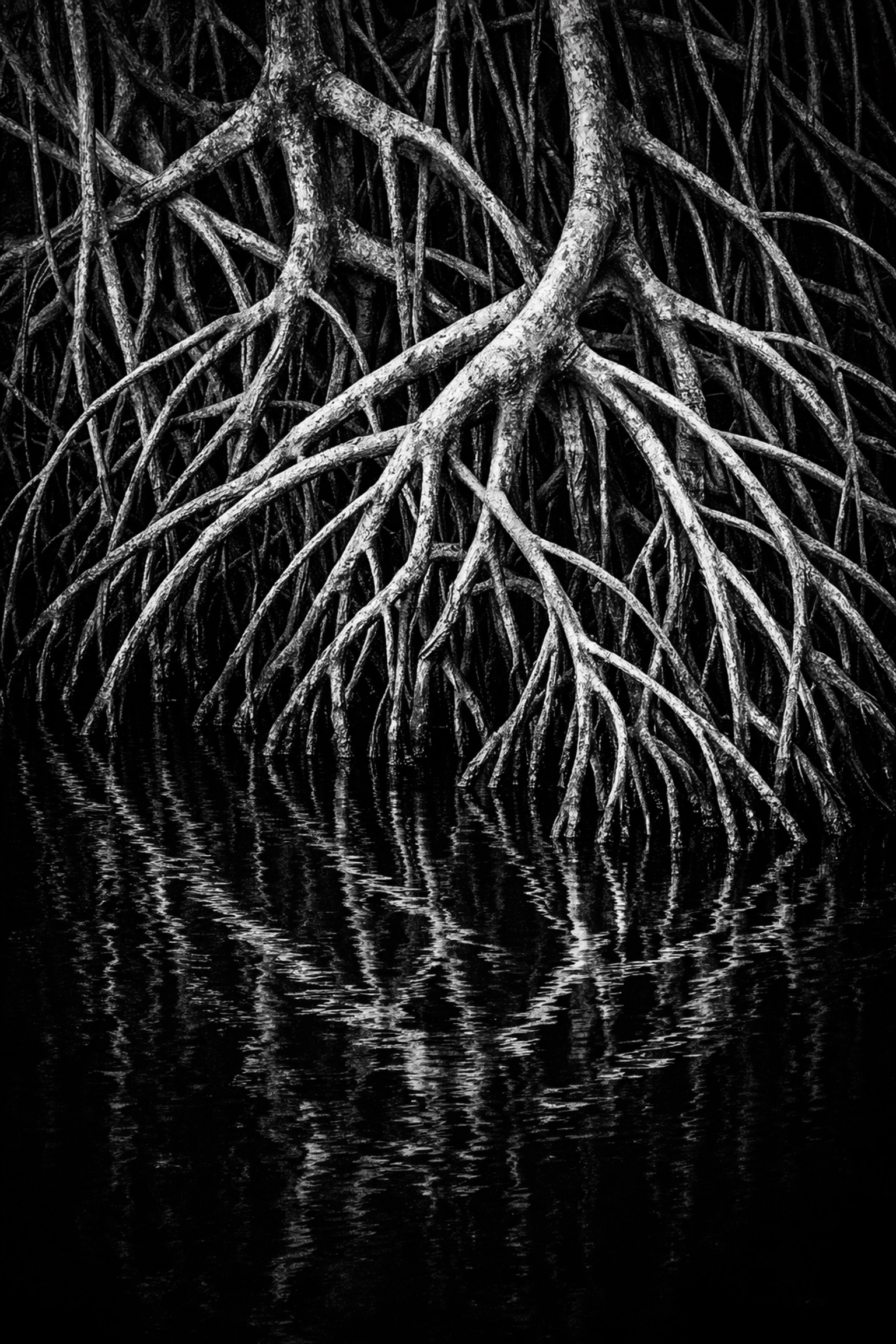
Look for the “ripples” in the sawgrass caused by the wind. Use the winding waterways as leading lines that pull your viewer’s eye into the frame. The mangroves provide incredible geometric shapes with their tangled roots: perfect for black and white photography where the focus shifts from color to form and contrast.
By integrating these elements, you elevate your work from a simple snapshot to a piece of fine art. Speaking of art, if you want to see how these landscapes look when printed on high-end gallery materials, check out Edin Fine Art for some inspiration.
Post-Processing for a Professional Finish
Your journey doesn’t end when you click the shutter. The “digital darkroom” is where you refine your vision. The goal of post-processing in landscape photography is to enhance the natural beauty of the scene without making it look artificial.
Adjust your white balance to reflect the warmth of the Florida sun, and use selective sharpening to bring out the detail in the cypress bark. If you want to streamline your workflow and achieve a consistent, professional look across all your images, I highly recommend using the Ultimate Lightroom Preset Collection. It’s the same toolkit used to produce the professional work you see on the Edin Chavez Blog.
Elevate Your Everglades Experience
Landscape photography in the Everglades is a test of patience and skill, but the reward is a portfolio of images that capture one of the most mysterious places on Earth. You have the tools, the locations, and the technical knowledge: now you just need to get out there and shoot.
If you are serious about taking your work to the next level and don’t want to waste time scouting locations that don’t produce, do yourself a favor and grab the Everglades Photography Guide. It is the most comprehensive resource available, designed specifically to help you succeed in this challenging environment.
For more insights on how to elevate your work, explore our site at Edin Studios for a deep dive into hundreds of tutorials and guides. Whether you are interested in night photography or the perfect skyline shot, we have the resources to help you master your craft.
Hence, with these considerations in mind, your next trip to the Everglades won’t just be a visit: it will be a breakthrough in your photographic journey. Pack your gear, check the tides, and get ready to capture the magic of the marsh.
#Ultimate #Guide #Landscape #Photography #Everglades #Succeed #trending #[now:year]