

Sleep hygiene doesn’t start when your head hits the pillow—the hours leading up to bed are just as important. As I discovered when I asked a sleep expert why I woke up tired, she identified my “high-stimulus” environment as the cause of my lower quality sleep.
So what is the space of the “highest stimulus”? Think bright lights, scrolling through social media, and lots of flashing screens. Things that I don’t put in the bedroom, but that surround me in the hours before bed.
Article continues below
Key Findings: At a Glance
- A higher-stimulus environment keeps your body and brain alert by increasing cortisol levels and suppressing melatonin.
- If you get ready for bed in a room with a higher level of stimulation, you will often find it difficult to achieve deep, quality sleep, leading to sleepiness in the morning.
- Bright lights, screens and scrolling create a stimulating environment.
- Dimming the lights and switching to warm-colored lamps mimic a natural sunset to prepare your body for sleep.
- Switching screens and scrolling for low-intensity activities like meditation and gentle stretching can also help you switch off.
- And try literally switching off, too: Showering by candlelight is another way to create a less-stimulating home.
- This will teach your brain that it can start to relax, and by the time you get into bed, you’ll be ready for sleep.
What is a high-stimulus environment and why is it bad for sleep?
“Many people spend their evenings in bright light, switching between screens and mentally processing the day’s events,” explains Dr. Anita Raja, internist and Herbalife women’s health expert. This creates a “high incentive” environment.
Why is this a problem? It’s all about hormones and circadian rhythm.
Bright light suppresses the production of melatonin, a hormone associated with sleep, because your body thinks the light corresponds to daytime. As a result, you are in daytime “focus” mode.

This is a problem that I didn’t even notice. My light is just my light, I never realized that my cozy party was lit up like a midday get-together.
Meanwhile, the excitement of scrolling through events and the latest cheeky work email causes cortisol, often known as the stress hormone, to flood your body, so you remain on edge.
Dr. Raja explains that with elevated cortisol levels and suppressed melatonin, this high-stimulus environment makes it difficult to achieve “deeper, restorative stages of sleep.”
Your sleep works in cycles, but when your body is alert, it has a hard time moving through each stage and often lingers in light sleep.
“Even spending eight hours in bed can lead to lighter and more fragmented sleep, which can leave you feeling tired the next day.” says the sleep expert.
Why Low Stimulus Leads to Better Sleep
“Creating a low-stimulus environment signals to the body that it is safe to relax,” says Dr. Raja.
She explains that by using “dim lighting, limiting screens, or a short calming ritual,” you can trigger the circadian changes needed for quality sleep.

This is because your body clock, or circadian rhythm, responds to cues from your daily routine and environment that indicate it’s time to de-stress and start switching off so you can fall asleep and stay asleep.
But when your high-stimulus environment tells your body that it’s still daytime, you don’t get that all-important signal to sleep.
“We sleep best when we feel ‘off the clock,'” adds Dr. Jordan Burns, DC, a licensed chiropractor and sleep health expert at Everynight.
This means you need to tell your body clock that you are safe, it is night and you don’t need to be on guard. Here are some ideas on how to do this:
5 Expert Tips for Creating a Low-Stimulant Environment for Better Sleep
I created a highly stimulating environment without even realizing it because screens and lights were a normal part of my routine. However, I know the feeling of my brain being too busy to shut down properly, so I wanted to know how to switch my environment to something lower.
Here’s what the experts suggest:
1. Consider lighting
Dr. Raja recommends “lower lighting” at home in the evening, as this mimics the natural sunset your circadian rhythm expects you to see in the evening.

Amber-colored bulbs can be purchased from retailers like Amazon to recreate the warm tones of evening light, while dimmers can help you set your indoor lighting just right.
For me, I’m going to start making a little effort to plug in soothingly warm string lights rather than defaulting to a cool ceiling light bulb.
2. Step away from screens
“Rewinding events can keep your brain on high alert when it should be calming down,” says Dr. Burns. “You’re exposing yourself to blue light, emotional triggers, and unpredictable stimulation, which can delay the release of melatonin and make it harder to fall asleep.”
It’s still unclear exactly how much blue light affects melatonin production, but screens definitely affect sleep. Recent studies have shown that the risk of insomnia increases by 59% for every hour spent looking at screens in bed.
While Dr. Burns advises you to put your phone down, he notes that you can use it “intentionally” by listening to soothing music or meditating while you sleep.
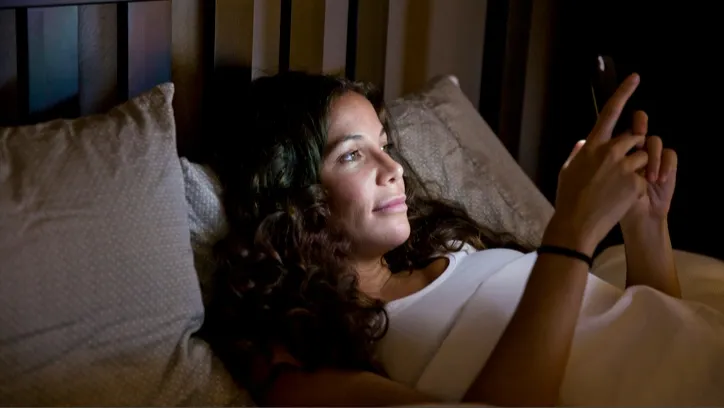
However, when it’s time to go to bed, he advises keeping your phone away from your nightstand.
“Notifications, lights, or even the anticipation of a message can keep your brain in a lighter sleep state,” he explains.
3. Clean up your bedroom
A cluttered bedroom isn’t just a cause of daytime stress: Clutter can contribute to anxiety at night, especially if you’re clawing through piles of clothes and unfinished tasks to get to the mattress.
Clutter means your bedroom is not the calming place it should be, and although you may not consciously think about it, your brain is aware of the problem.
If a full cleaning sounds a little daunting, start with your nightstand: it’s quite likely the last thing you see before bed, so you want to keep it clutter-free.
4. Set the mode to “minimize”
Experts have previously told us that a sleep schedule is a great and practical way to ensure consistently high-quality sleep, and keeping stimulation levels low should help you fall asleep faster.

So what low-stimulation activities can you incorporate into your pre-bedtime routine? Sleep meditation and gentle stretching are good options, and reading is a favorite screen-free activity, but choose a boring book rather than the latest true crime blockbuster.
5. Take a soothing shower.
“Warm showers can be especially helpful,” says Dr. Raja. “Warm water relaxes the muscles and subsequently helps the body temperature gradually decrease, which is one of the body’s natural signals that it is time to sleep.”
Lately I’ve been enjoying showering in the dark, where I turn off the lights and wash in the soft flickering light of a candle. A feeling of indulgent calm, like a trip to the spa.

Follow Tom’s Guide to Google News And add us as your preferred source to receive our latest news, analyzes and reviews in your feeds.
#doctor #helped #correct #mistake #sleep #hygiene #wake #full #energy #trending #[now:year]